A real estate syndication is a group of investors pooling money to buy one property through a single company. A sponsor, the general partner, finds and runs the deal. The limited partners supply the capital, give up control and get paid through a set order of distributions called a waterfall.
How does a real estate syndication work?
Most syndications move through three phases. The sponsor buys the property with investor equity plus a loan. The sponsor operates it and pays distributions from cash flow. Then the sponsor exits through a sale or refinance, returns investor capital and splits any profit.
The property usually sits in its own LLC or limited partnership. The operating agreement and the private placement memorandum set out everyone's rights. Because the entity is typically taxed as a partnership and files Form 1065, each investor gets a Schedule K-1 every year.
What does the GP do and what does the LP give up?
The GP sources the deal, secures financing, oversees management, keeps the books and reports to investors.
The LP brings capital and patience. An LP doesn't pick the contractor, approve rent increases or decide when to sell. In exchange, an LP's liability is generally limited to the amount invested. An investor who wants a vote on major decisions will be frustrated for the entire hold.
How do LPs get paid in a syndication?
Most deals pay out through a waterfall, where cash goes to each party in a set order.
First comes the preferred return, or pref. It's a percentage of invested capital that LPs receive before the sponsor shares in profit. Some prefs are cumulative, so a missed payment carries forward. Others aren't. After the pref, the remaining profit is split between LPs and the GP. The sponsor's share is called the promote.
A hypothetical example. An investor puts in $100,000. The deal carries a 7% pref with a 70/30 split after that. The investor is owed $7,000 a year before the sponsor shares in profit. Profit beyond that, including at sale, goes 70% to the LPs and 30% to the GP. These numbers are illustrative only.
Sponsors also charge fees, commonly an acquisition fee at closing (purchase) and an asset management fee during the hold to pay for syndication operations. Fees come out before investors see a return.
What are the risks of a real estate syndication?
The money is illiquid. Plan on staying in for the full hold and possibly longer.
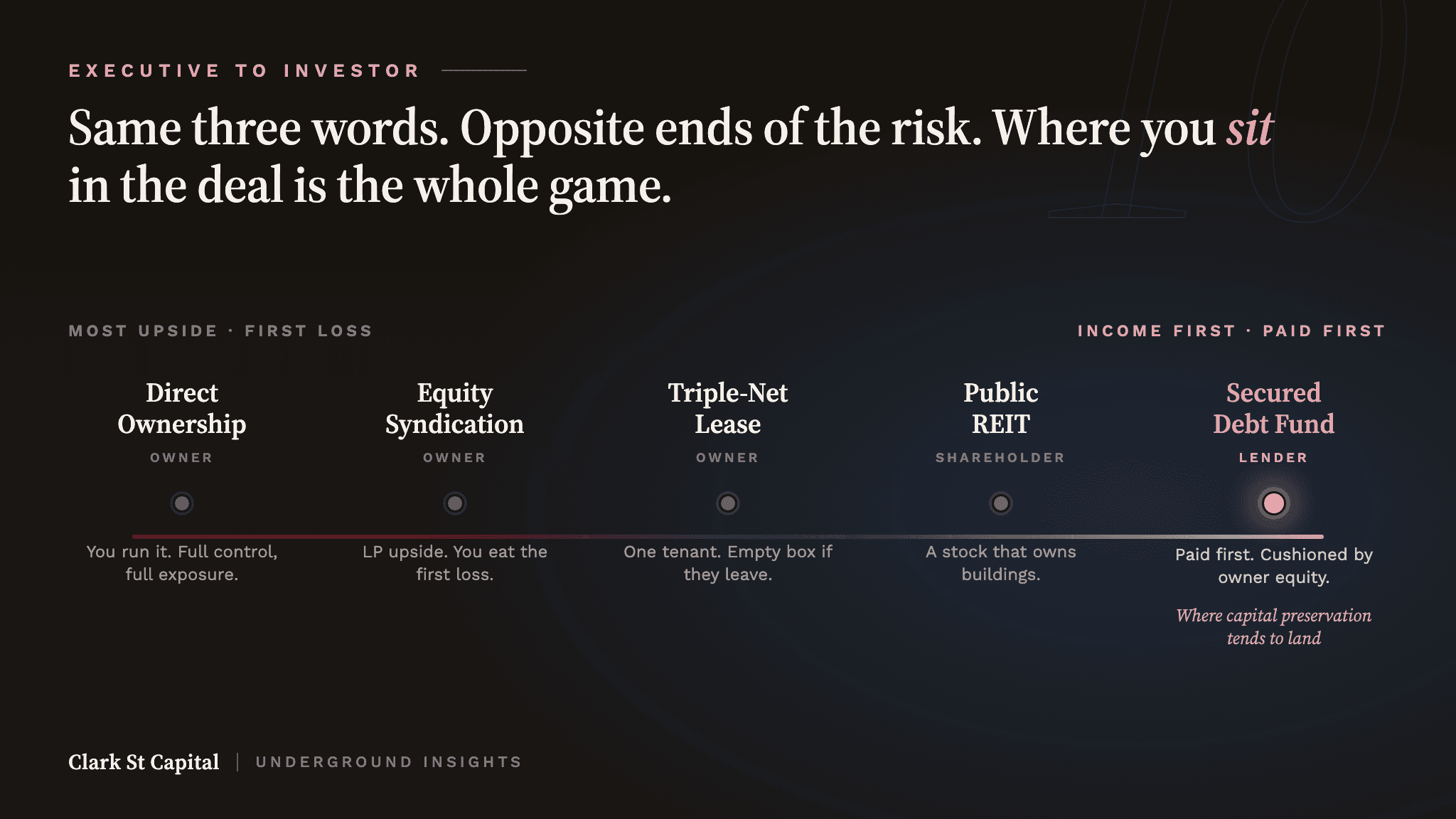
Equity sits last in line. The lender is paid before investors. If the building struggles, the equity absorbs losses first.
Distributions depend on cash flow. A vacancy spike or a large repair can reduce or pause them.
Debt drives much of the outcome. When interest rates rose in 2022 and 2023, deals financed with floating-rate loans saw payments climb. Some sponsors cut distributions or asked investors for more capital.
Who can invest in a real estate syndication?
Most syndications are sold under Rule 506 of Regulation D. Under 506(c), a sponsor may advertise but must verify that every investor is accredited. Under 506(b), a sponsor can't advertise but may admit up to 35 non-accredited investors who are financially sophisticated.
Under SEC Rule 501, an individual is accredited with net worth over $1 million excluding a primary residence, or income over $200,000 ($300,000 jointly) in each of the last two years. Holders of a Series 7, 65 or 82 license also qualify.
Where does a syndication fit in your financial journey?
The right real estate vehicle depends on how soon you need the money, how much control you want and what's already in place.
An LP seat in a syndication tends to fit when all of these are true:
- You're accredited.
- You won't need the money for the full hold stated in the offering documents.
- Your retirement savings and emergency reserves are already built.
- You want growth and accept equity risk to get it.
- You have passive income that K-1 depreciation can offset. Rental losses are generally passive under IRS Publication 925, so confirm with a CPA.
Index funds fit when you're still building your base or want daily liquidity at low cost.
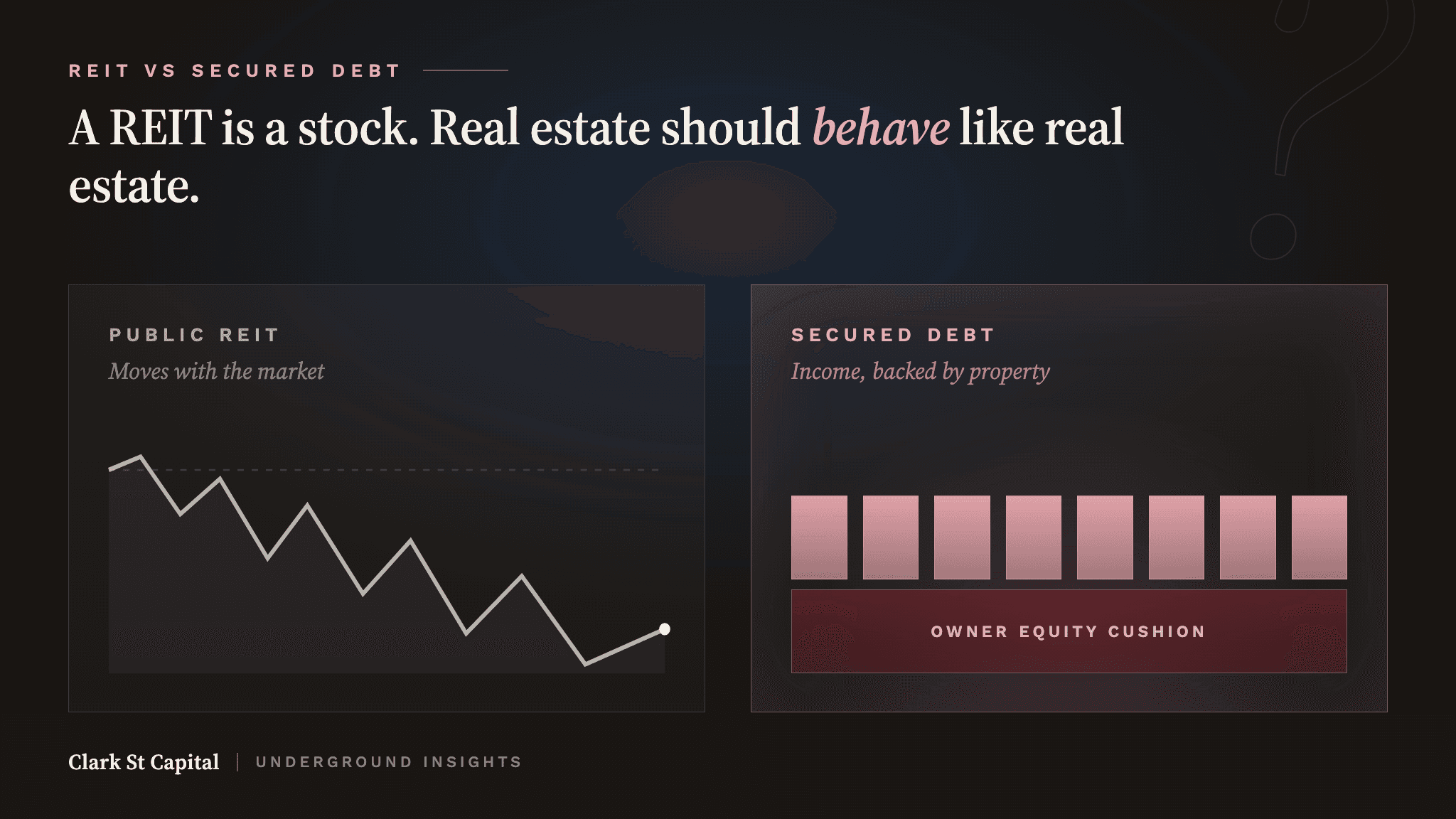
Publicly traded REITs fit when you want real estate exposure you can sell any trading day. They tend to move with the stock market, as covered in The REIT Alternative for People Who Actually Want Real Estate. Non-traded REITs are illiquid, as Investor.gov warns.
A debt fund fits when protecting principal and steady income matter more than upside. A lender is paid before equity but earns only the interest. Debt Fund vs. Real Estate Syndication compares the two seats.
Direct ownership fits when you want control and have time to manage a property or a manager. How to Invest in Real Estate Without Being a Landlord covers the alternatives.
If you might need the money soon, want control or can't yet evaluate a sponsor, a syndication is the wrong vehicle.
What should you ask any syndication sponsor?
A syndication investment can tie up capital for years. The offering documents decide who controls the building and who gets paid first. An investor who signs without understanding that structure learns it when a distribution stops or a sale gets pushed back. By then the money is committed.
Get written answers to these before committing:
- How many deals have you taken full cycle and what did each return, including any that lost money?
- How much of your own money is in this deal?
- What's the complete fee list and when is each fee paid?
- Is the debt fixed or floating? If floating, is there a rate cap and when does it expire? Does the loan mature before the planned exit?
- How large are the reserves and what does the operating agreement say about capital calls?
- Is the pref cumulative?
- Will you share references from past investors, including one who was unhappy?
White Coat Investor's guide to evaluating a syndication recommends spending most of your review time on the risk factors section of the offering documents. Treat a sponsor who won't answer in writing as a warning sign.
FAQ
Are real estate syndications a good investment?
They can be for an accredited investor who doesn't need the money or control for years. Judge the sponsor's track record, debt and fees before the projected returns.
How do syndication sponsors make money?
Through fees and the promote. The promote is the sponsor's share of profit after investors receive the pref. The offering documents spell out both.
How long is money tied up in a syndication?
For the length of the business plan, which the offering documents state as a target. A sale or refinance can come later than planned and an LP generally can't exit early.
About Ed Mathews
Ed is the President of Clark St Capital. He started investing in 2011 after analyzing deal after deal and making zero offers, until a mentor handed him a pen and made him sign his first contract. Since then, Clark St has operated across single-family, multifamily and land development, with Ed also invested as a limited partner in funds and large multifamily projects. Ed also spent more than two decades in Silicon Valley building systems for global companies. He hosts the Real Estate Underground podcast, with new episodes every Tuesday at 12pm.