A physician told me his hourly rate is higher than the return on almost any real estate deal he could run himself. He's right. He also has no hours to give. So he does what most high earners do. He maxes the retirement accounts, dumps the rest into index funds, and tells himself he'll look at real estate someday.
Someday never comes, because every version he's pictured is a second job. Tenants. Contractors. Underwriting deals at 11pm after a full day of patients. That's not passive. That's a career change he didn't ask for.
Passive real estate for a doctor, lawyer or business owner means putting capital into real estate you don't operate. The most genuinely hands-off version is a real estate debt fund. You lend against property, you earn income, and you never take a call.
TL;DR
- High income, no time, everything in index funds. That's the default for busy professionals, and it leaves real estate on the table.
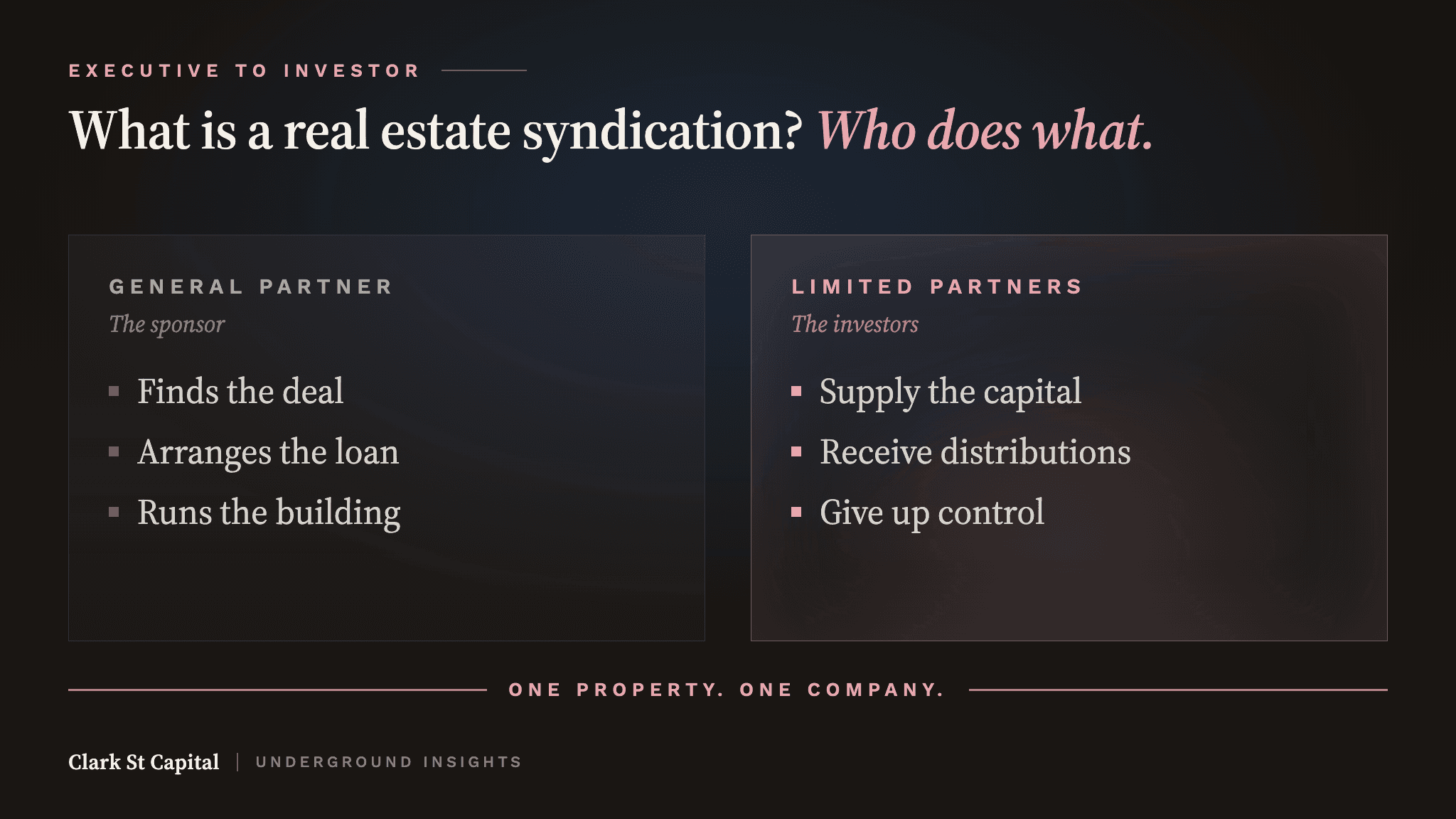
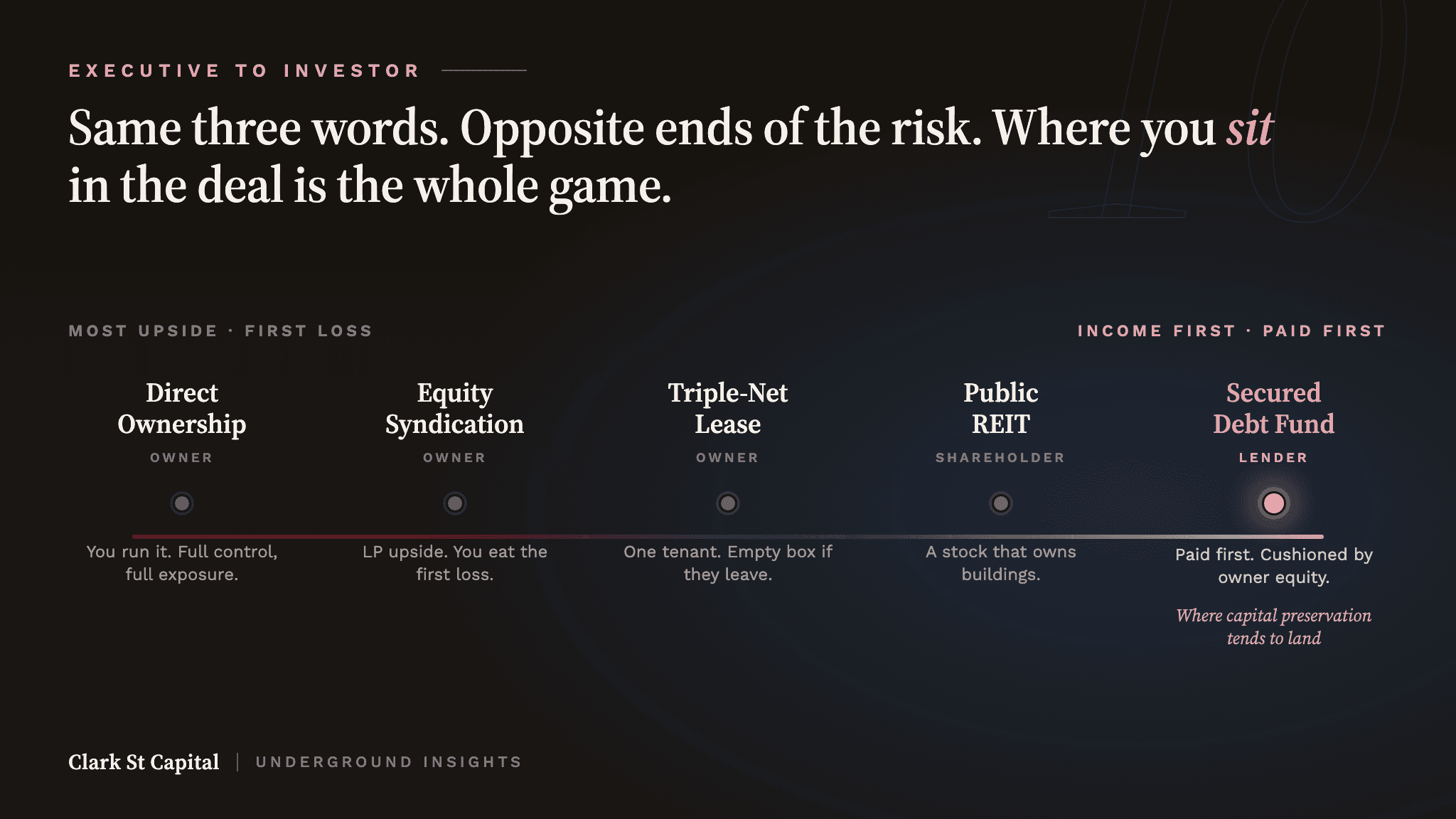
- "Passive" is not one thing. Owning a rental with a manager is still a job with a middleman. A syndication hands you the riskiest seat in the deal.
- The multifamily horror stories your colleagues tell happened on the equity side, where the owner eats the first loss.
- A debt fund puts you in the lender's seat: first-position, income first, backed by a specific property with the owner's equity underneath you.
- This audience should optimize for protection over a headline number. Doubles, not home runs.
The trap the high earner falls into
You built a career that pays well and demands everything. Your time is the scarcest thing you own, and real estate, the way most people do it, is a tax on exactly that.
So the money goes where it takes zero attention. Retirement accounts first. Then a taxable brokerage account, mostly index funds. It's fine. It compounds. But it's all one asset class dressed up as diversification, and it moves as one thing on a bad day.
I get the pull, because I lived the other side of it. I spent more than two decades building systems in Silicon Valley before I did real estate full time. Demanding job, good income, no hours. I wanted real estate and I had the same excuse everyone has. No time to run it. The difference is I eventually learned there's a version that doesn't ask for your time at all.
The horror stories were on the equity side
Here's the fear nobody says out loud. You've heard the multifamily stories from the last few years. A colleague put money into a deal that promised 18 or 20 percent, and instead got a capital call, a paused distribution, or a zero.
That fear is earned. Don't let anyone talk you out of it. But understand where those stories come from. Almost all of them happened in the same seat: the equity.
When you invest as a limited partner in a syndication, you own a slice of the equity. Equity is last in line. When a deal underperforms, misses on rents, or gets caught by rates, the equity is what gets eaten first. The upside is real when it works. So is the exposure when it doesn't. That's the seat that produced the stories that scared you.
The lender's seat is a different bet
Now the other seat. Instead of owning the property, you lend against it.
A real estate debt fund pools investor capital and makes loans secured by property. You're not the owner. You're the lender. The borrower pays interest, and that interest is your income. The fund holds a first-position lien, so if a project goes sideways and the property sells, the loan gets paid before the owner sees a dollar.
Three things make this behave the way a protection-first investor actually wants.
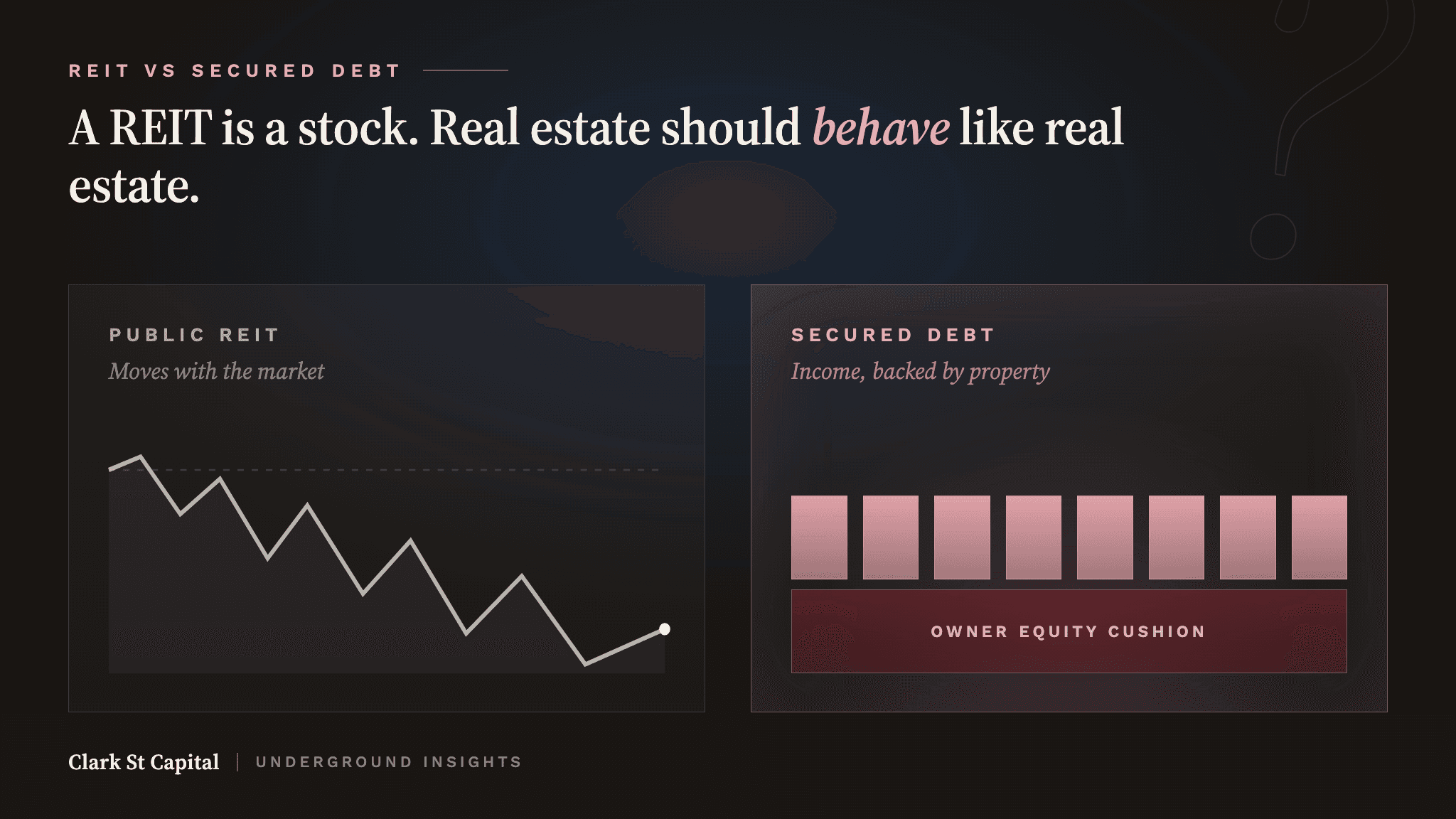
It's income, not a bet on price. Your return comes from loan payments, not from what a market decides a building is worth this quarter.
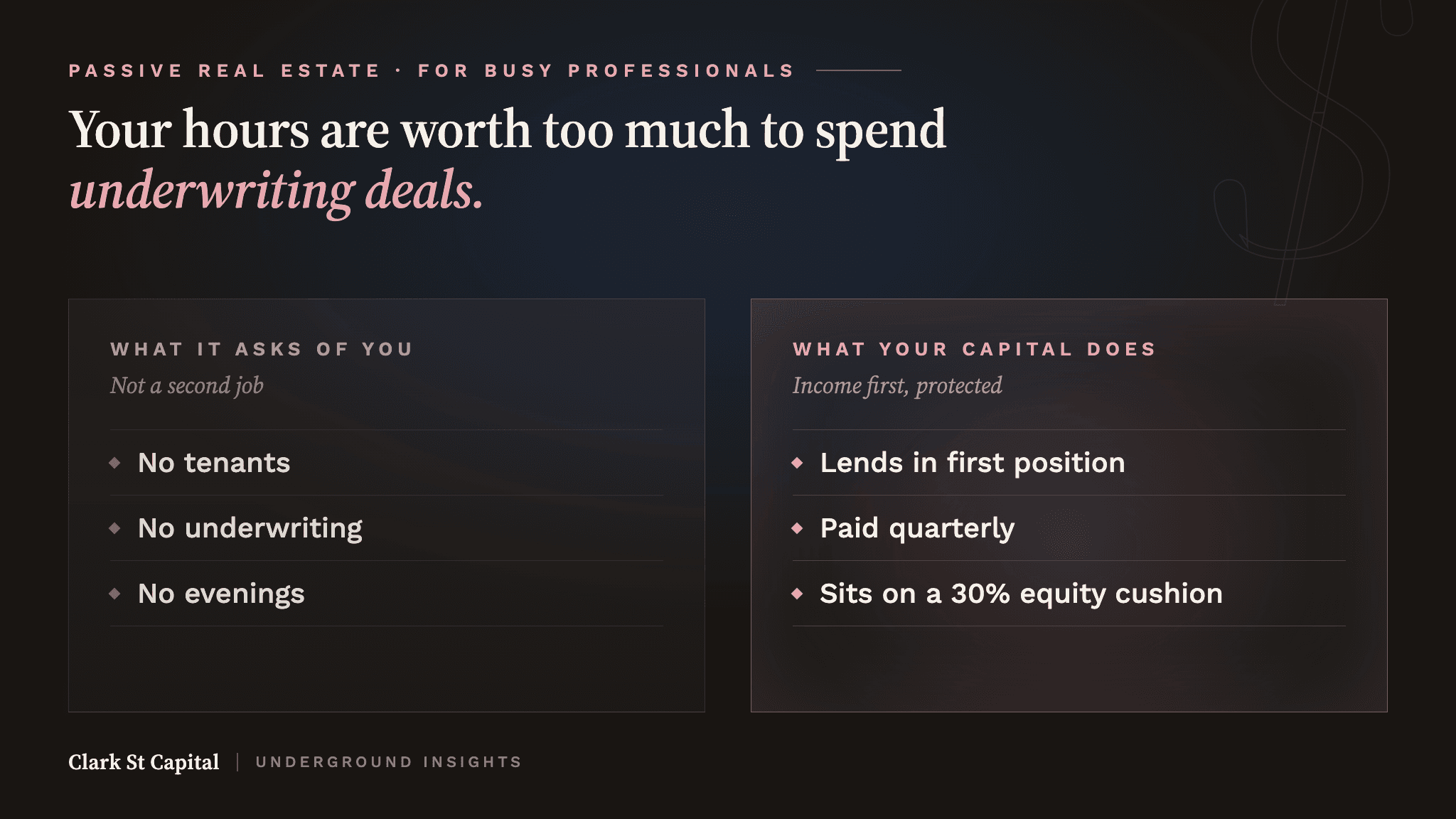
It's backed by a specific property with a cushion beneath you. On the loans behind this kind of fund, the loan is capped at 70 percent of a property's after-repair value. The owner's roughly 30 percent equity sits under the loan and takes the first loss. The property has to fall through that entire cushion before it reaches your principal. You're sitting where the equity investor's money protects yours.
It runs without your attention. No tenants, no operator's five-year business plan riding on your evenings, no ticker to refresh. It's the closest thing to genuinely passive that's still actual real estate.
Protection over a headline number
This is the part that matters most for someone in your position. You do not need a home run. You already earn a home run at work.
What you need is capital that works without your attention and doesn't blow up. A steady, protected return you can count on beats a big number you have to pray on. We target 11 percent in the fund, paid quarterly, and I'll say the honest part out loud: that's a target, not a guarantee. Anyone who guarantees you a return on a debt fund is telling you something that isn't true.
The reason it's a target is the reason it's trustworthy. What reaches you is the interest and points the loans earn, minus the real cost of running the fund, and those costs move a little year to year. There's no promote and no spread skimmed off the top. Clark St invests alongside our investors in the same fund on the same terms, so our capital is exposed to the same loans yours is. When we underwrite conservatively, we're protecting our own money right next to yours.
Doubles, not home runs. That's the whole philosophy, and it's built for exactly the person who has money to put to work and no appetite for another gamble.
What it actually asks of you
None of this is free, so here's the honest tradeoff.
It's for accredited investors. The SEC defines that as 200,000 dollars in income, or a net worth over 1 million dollars outside your home. It's a relationship, not a button in an app.
It's illiquid. You can't sell it on a Tuesday afternoon the way you can a REIT. The minimum is 100,000 dollars, on a 12-month term, with distributions paid quarterly. That's the price of a return that isn't chained to the stock market's daily mood.
And you give up the ceiling. When real estate runs hot, the equity owner makes more than the lender ever will. You're trading the home run for getting paid first. For someone whose real job is the home run, that's the right trade.
Which seat fits you
Being busy was never the reason to skip real estate. It was the reason to skip the version that acts like a second job.
The real question isn't whether a high earner should own real estate. It's which seat matches the time, control and risk you actually want to carry. For the doctor, lawyer or business owner who wants income backed by something real, without a second career and without a stock-market proxy, the lender's seat deserves a serious look.
Want the operator's read on how these loans behave through a real cycle, told through actual deals instead of projections? That's what our newsletter, Underground Insights, covers every month. It isn't tips and tricks. It's real deals and the real lessons of putting capital to work and protecting it.
Sign up at clarkst.com/newsletter.
Prefer to listen? Subscribe to the Real Estate Underground podcast for the same conversations, unscripted.
About Ed Mathews
Ed is the founder of Clark St Capital, Clark St Homes and Elevista. He started investing in 2011 after analyzing deal after deal and making zero offers, until a mentor handed him a pen and made him sign his first contract. Since then, Clark St has operated across single-family, multifamily and land development, with Ed also invested as a limited partner in funds and large multifamily projects. Ed also spent more than two decades in Silicon Valley building systems for global companies. He hosts the Real Estate Underground podcast, with new episodes every Tuesday at 12pm.