TL;DR
- I built my first multifamily portfolio without a dollar of outside money.
- Flips built the cash. Rentals turned that cash into wealth that compounds without me.
- Most people only ever use one of those two playbooks.
- When rates nearly tripled on a property carrying bridge debt, the refinance I'd planned on wasn't there. Cash from the flip business is what got us through it.
- The debt fund we run today lends from equity, not leverage, because of that lesson.
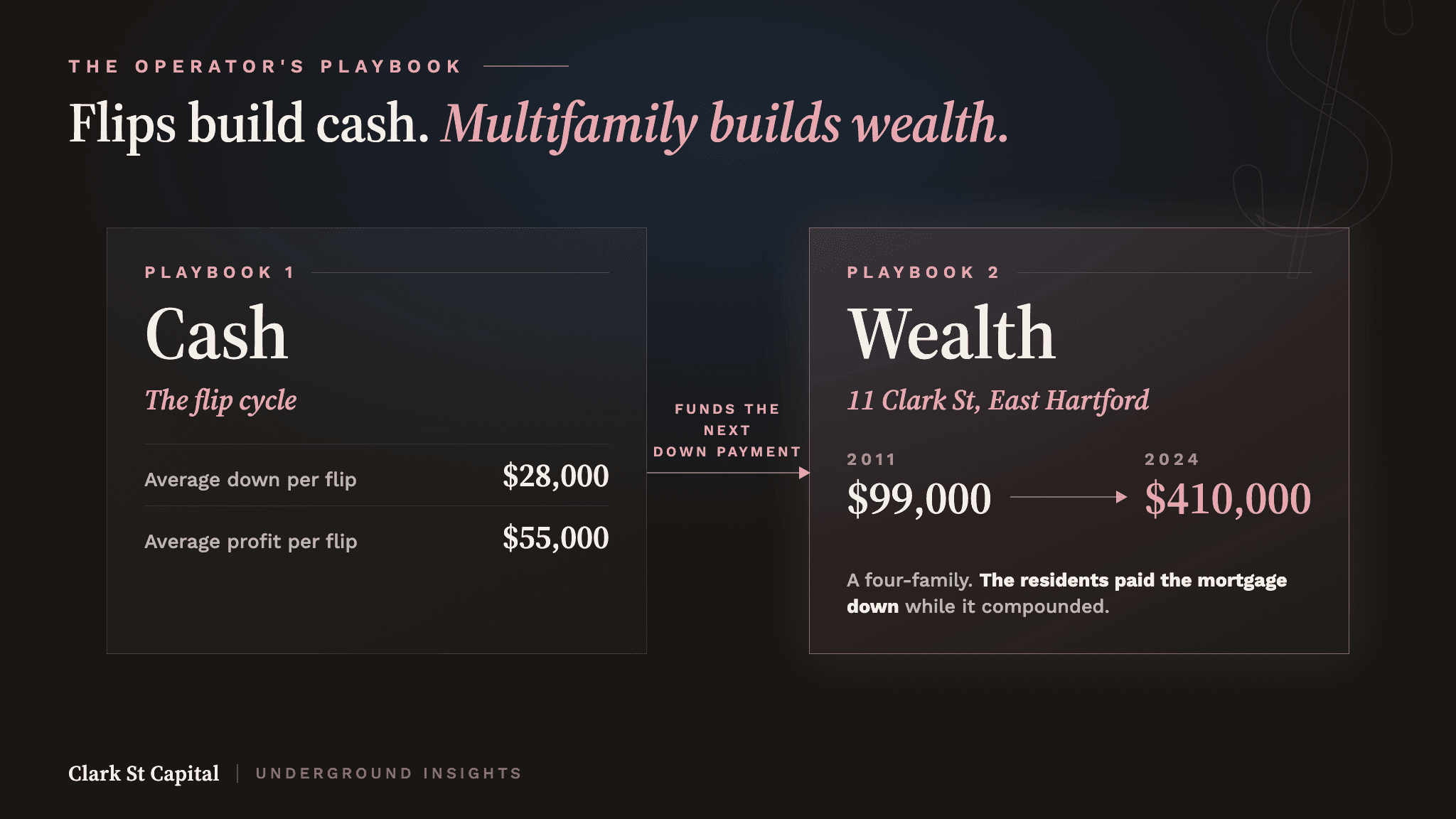
In 2011 I bought a four-family at 11 Clark St in East Hartford, Connecticut. $99,000. I sold it in 2024 for $410,000. That building is where the name Clark St comes from and it's also where I learned the difference between a system that pays you once and a system that keeps paying you, over time.
For almost eight years after that first building, I ran the same system. Flip a house. Take the profit. Flip another. When I had enough cash for a down payment, I bought a small to mid-size multifamily. Repeat.
I funded every cycle myself. No investors, no fund, no outside capital. Just flips paying for buildings, one deal at a time, across Hartford and Middlesex County.
Why I Never Skipped Straight to Multifamily
A flip is a simple transaction. Buy it, fix it, sell it and you're done in months. A rental is a decade-long hold that pays you slowly and compounds year after year. Those are two very different businesses and they need two very different playbooks.
With each flip I put, on average, $28,000 down and cleared at least $55,000 in profit. That's real, liquid cash on a timeline I could plan around.
A rental doesn't hand you that kind of money in year one. It takes years to season a property before the cash flow amounts to anything substantial. But while that cash flow builds, the residents pay the building expenses and pay your mortgage down.
So flips weren't the goal, although I loved doing them. They were the funding engine. Every flip added to the down payment for the next rental.
What Changed When I Went Full-Time
I flipped on the side for years while working 80-plus hours a week and traveling 150 nights a year for Silicon Valley companies. In February 2018, I went full-time in real estate. That year we ran 16 flip projects.
Running 3 or 4 of them at once nearly broke me, mentally. Flips are hands-on. Every one throws you a curveball. Every one demands attention week to week, from the crew to the draw schedule to the sale.
A rental isn't like that. Once it's stabilized, it doesn't need me showing up daily or weekly. I outsourced that to a team I built.
That's the real difference between the two playbooks and it's the one most people miss when they hear "real estate portfolio."
What I Got Wrong About Debt
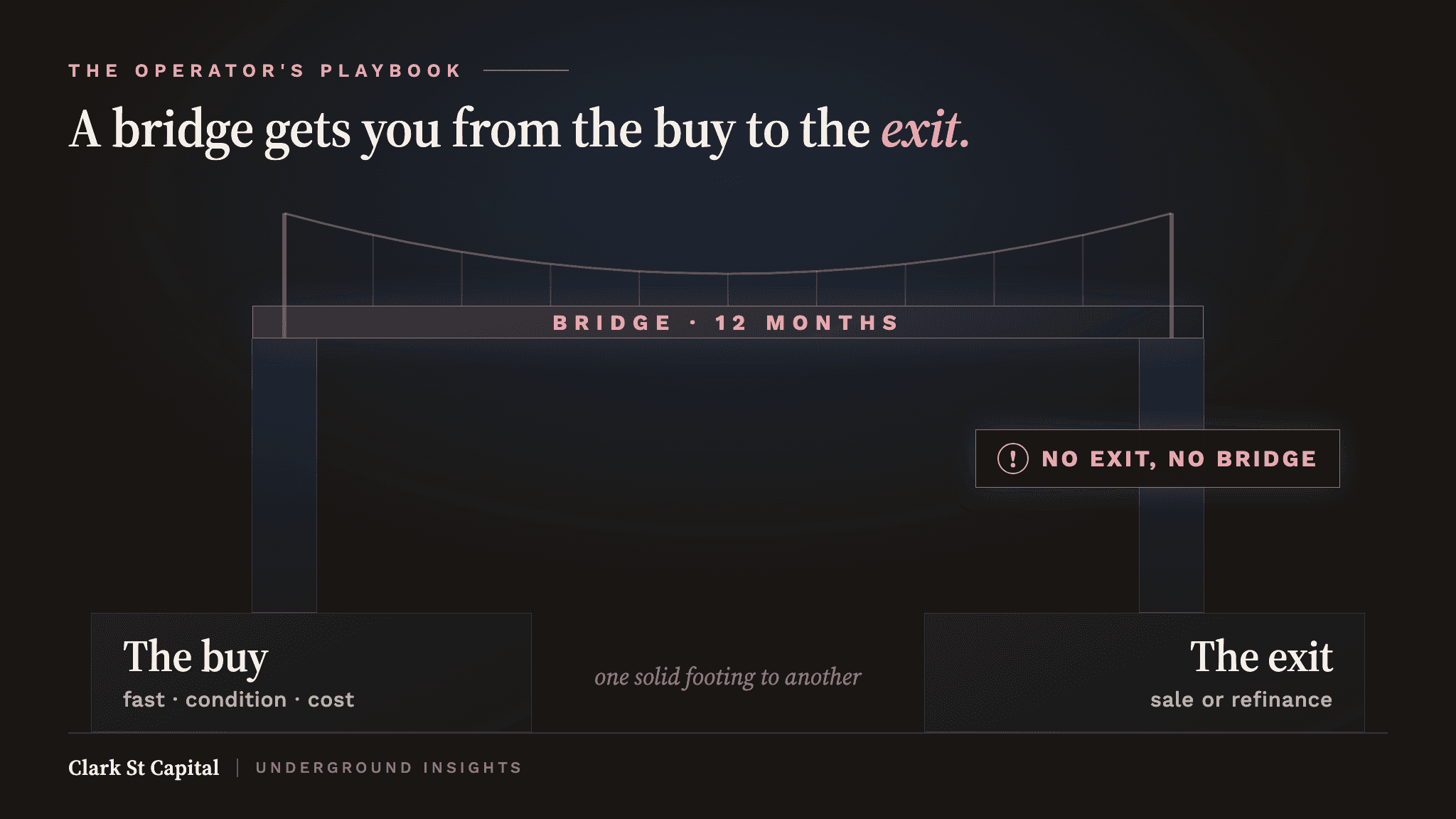
In the last five years, I had a property on bridge debt when rates started climbing. By the time I was ready to refinance into permanent financing, rates had nearly tripled. The exit I'd planned wasn't there anymore.
Thankfully, the flip business was still producing cash and that cash helped us manage our way through it. A close call, for sure. It wasn't my only close call. More on those in a future article.
The lessons stuck:
- You can never have too much cash.
- Using bridge debt is a high-stress tight wire.
- Never ever cross-collateralize. Ever.
And I wasn't alone. A lot of other investors using bridge debt got crushed. Still others are about to get crushed. Bridge debt works well in a stable rate environment, but the last 5 years have been anything but stable.
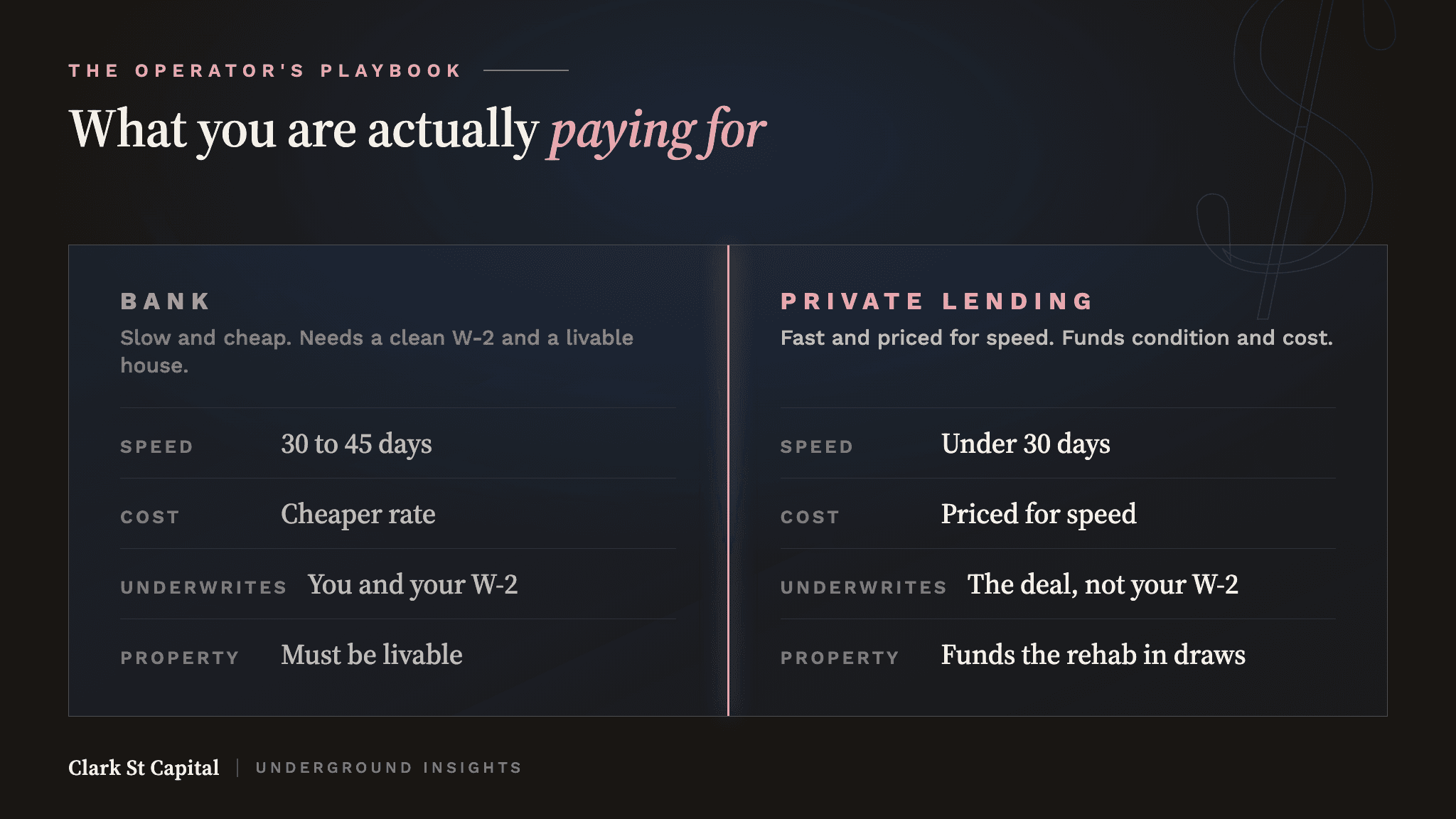
That's why the debt fund we run doesn't borrow to lend. We don't have a line of credit. It lends from equity alone. There's no leverage stacked between an investor's capital and the loan it funds and no bridge-to-permanent gap for a rate move to blow up.
Yes, that decreases our returns. But I, and our investors, sleep well at night. The last five years have given me enough brain damage. I prefer boring.
Two Playbooks, Two Jobs
Flips build cash. Multifamily rentals build wealth. That $99,000 building paid me a little bit every month in rental income and it sold for $410,000 in 2024.
Most people trying to get into real estate only use one of those two playbooks. A house flip is a cash-building playbook. A rental is a buy-and-hold-forever wealth-building playbook.
You can use either or both, depending on where you are in your financial journey. And my way isn't the only way. There are plenty of people successfully building wealth in industrial, flex industrial, self-storage, mobile home parks, parking lots and many other asset classes.
The system hasn't changed much since 2011. A flip or two buys the next long-term investment. What's changed is the value we place on cash and how carefully we use debt.