
Scroll real estate for ten minutes and you'll find a deal promising 20 percent. Then another at 22. The pitch never changes. The market only goes up, the operator is a genius and this is the one you can't afford to miss.
Most of the people making that pitch are one bad cycle from a capital call.
Here's the contrarian read. The best passive real estate investments for building real wealth aren't the ones with the biggest headline number. They're the ones with a return you can count on across cycles, backed by protection you can actually see. Doubles, not home runs.
TL;DR
- The 20 percent pitch sells the upside and hides the downside. When it misses, the equity gets eaten first and the capital call lands in your inbox.
- A double is a steady, protected return you can count on year after year. That is what compounds.
- The real version of real estate passive income is income backed by a lien, not a bet on price that has to keep going up.
- "We protect your capital exceptionally well" is a stronger promise than "we swing for the fences." One is a system. The other is a hope.
- A capital-preservation debt fund targets 11 percent, paid quarterly, in first position, with the owner's roughly 30 percent equity sitting under every loan. Target, never a guarantee.
Why the 20 percent pitch keeps blowing up
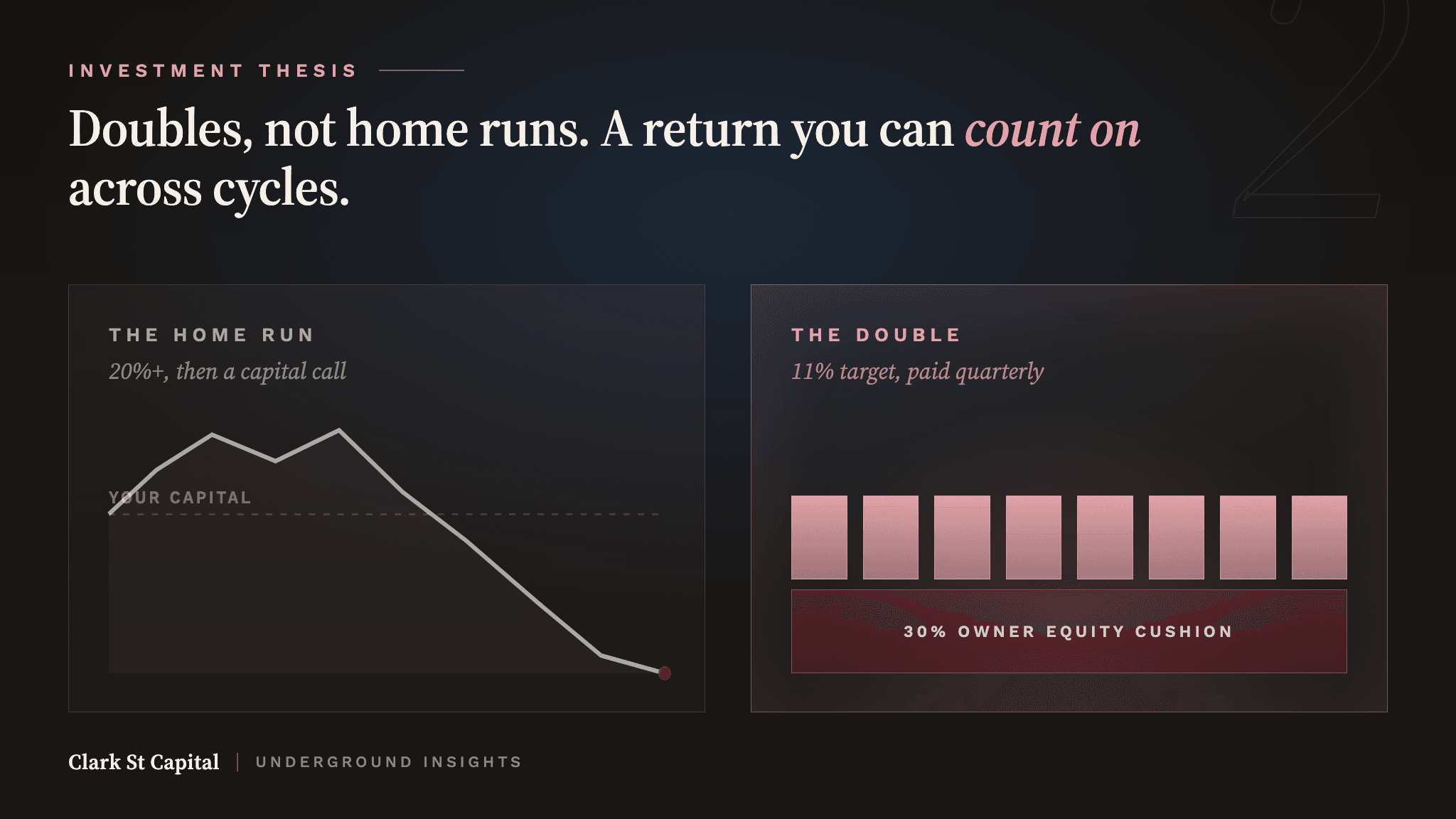
Start with what the big number actually is. A 20 percent target lives in the equity seat. The investor owns a slice of the deal, so the investor eats the first loss when the plan misses.
And plans miss. Rates move. A rehab runs long. Rents come in soft. The last few years handed the multifamily world a stack of stories that all started with a big projected return and ended with a capital call, a pause on distributions or a sponsor handing back the keys.
None of those investors thought they were gambling. They saw a confident operator and a fat number and they wired the money. What they didn't see was where they sat in the deal. Last in line, holding the most risk, sold on the most upside.
The home run isn't a lie. It's just the half of the story that gets printed on the billboard. The other half, the part where the equity absorbs the damage first, never makes the pitch.
What a double actually looks like
Now the other seat. Instead of owning the deal and chasing its upside, you lend against it and get paid first.
A real estate debt fund makes loans secured by property. The borrower pays interest, and that interest is your income. Not a bet on what the market decides a building is worth this quarter. Income, backed by a lien, that shows up whether or not the market had a good week. That is the real version of real estate passive income, and it behaves nothing like the version on the billboard.
Here's what a disciplined one targets. An 11 percent return to investors, paid quarterly, on a 12-month term. The fund lends in first position, which means if a project sells short of plan, the loan gets paid before the owner sees a dollar. And every loan is capped at 70 percent of the property's after-repair value, so the borrower's roughly 30 percent equity sits underneath yours and takes the first loss. The property has to fall through that entire cushion before it ever reaches your principal.
That's the double. Not thrilling. Not a story you tell at a party. It just keeps showing up.
Ed walks through how these loans actually behave through a full cycle on the Real Estate Underground podcast, told through real deals instead of projections.
Why "we protect your capital" beats "we swing for the fences"
Two operators pitch you. One promises to swing for the fences. The other promises to protect your capital exceptionally well. The first sounds more exciting. The second is the stronger promise, and here's why.
Swinging for the fences is a hope. It depends on the market cooperating, the operator being right and nothing going wrong. Protecting capital is a system. First position. A loan capped at 70 percent of finished value. Vetted operators only. Those are structural choices that hold up whether the market is kind or cruel.
The math is quieter than it looks. Two strong years at 20 percent and one year that ends in a capital call can leave you behind a steady double that never gave the money back. You can't compound a return you had to return. The investor who avoids the crater and collects the double year after year tends to finish ahead of the one chasing the number that occasionally goes negative.
That's the whole thesis. Durable wealth comes from returns you keep, not returns you brag about.
But 11 percent sounds low next to 20
Fair. Say it out loud, because it's the honest objection.
Eleven percent next to a 20 percent pitch feels like leaving money on the table. Until you weight it for what has to go right. A 20 percent target you might hit, might miss and might turn negative is not worth more than an 11 percent target protected by a 30 percent equity cushion beneath you. One is a coin flip with a good story. The other is arithmetic with a floor under it.
And the 11 percent is a target, never a guarantee. Anyone who tells you a fund's return is guaranteed is telling you something that isn't true. What reaches you is what the loans earn minus the real cost of running the fund, and those costs move. That variability is exactly why it's a target you can follow, not a promise no one can keep.
One more thing, because it's the part that should earn the trust. There's no promote and no spread skimmed off the top for the manager. Clark St invests alongside its investors in the same fund on the same terms. When we underwrite conservatively, we're protecting our own capital right next to yours. The minimum to invest in this kind of fund is 100,000 dollars, and it's for accredited investors.
Which investor this is for
If you've been burned by a deal that promised the moon and delivered a capital call, this is the whole point. You don't have to gamble to build wealth in real estate. You can stop swinging for the fences and start compounding.
The best passive real estate investments for someone in your seat aren't the loudest ones. They're the boring ones that protect the downside and pay you on schedule. Singles and doubles, hit year after year, quietly beat the home run that occasionally strikes out with your capital.
Want the operator's read on how these positions behave through a real cycle, told through actual deals instead of projections? That's what our newsletter, Underground Insights, covers every month. It isn't tips and tricks. It's real deals and the real lessons of putting capital to work and protecting it.
Sign up at clarkst.com/newsletter.
Prefer to listen? Subscribe to the Real Estate Underground podcast for the same conversations, unscripted.
About Ed Mathews
Ed is the founder of Clark St Capital, Clark St Homes and Elevista. He started investing in 2011 after analyzing deal after deal and making zero offers, until a mentor handed him a pen and made him sign his first contract. Since then, Clark St has operated across single-family, multifamily and land development, with Ed also invested as a limited partner in funds and large multifamily projects. Ed also spent more than two decades in Silicon Valley building systems for global companies. He hosts the Real Estate Underground podcast, with new episodes every Tuesday at 12pm.